
News, evidence, education, and perspectives shaping artificial intelligence in dentistry
This month, AAAI-D looks at what is changing across the dental AI landscape—from real-world validation and adoption to education, equity, prevention, and emerging applications. We also share important Academy updates on Fellowship, recognized continuing education, upcoming programs, and our inaugural Annual Meeting, along with a conversation with a leader in dental education.
Academy News
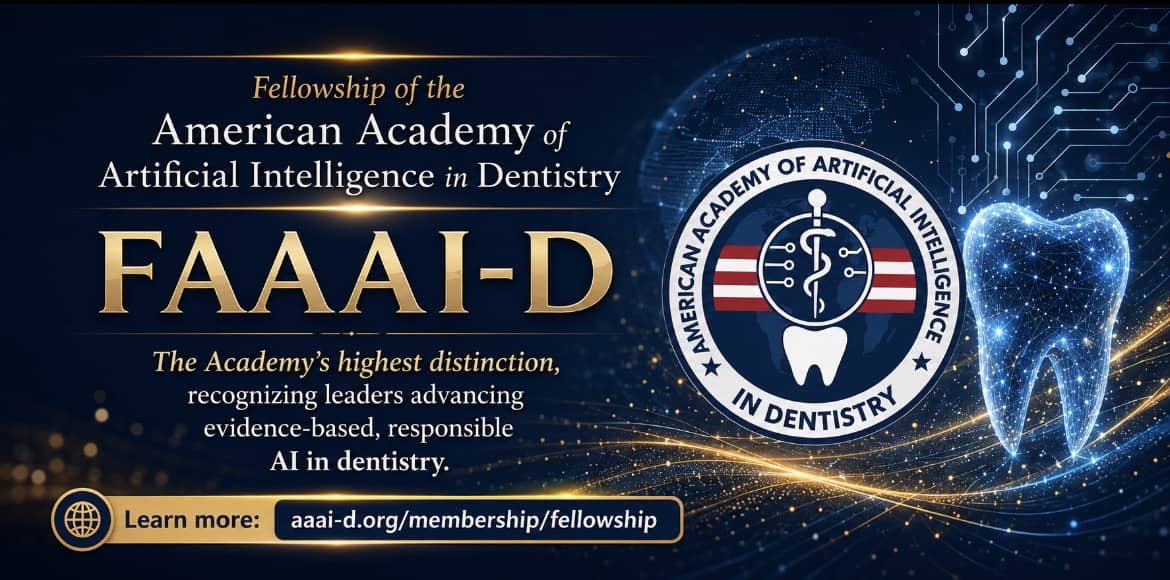
AAAI-D Fellowship: Applications Are Now Open
Applications for Fellowship in the American Academy of Artificial Intelligence in Dentistry (FAAAI-D) began earlier this month, creating a new pathway for members who have demonstrated meaningful professional development and engagement in artificial intelligence in dentistry.
To provide applicants and reviewers with a predictable process, Fellowship applications will be considered in review cycles throughout the year.
2026–2027 Fellowship Review Schedule
- Cycle I: Applications received through August 31, 2026
- Cycle II: Applications received September 1–November 30, 2026
- Cycle III: Applications received December 1, 2026–February 28, 2027
- Cycle IV: Applications received March 1–May 31, 2027
- Cycle V: Applications received June 1–August 31, 2027
Applications received after the close of a cycle automatically move into the next review period.
Fellowship reflects more than completion of educational requirements. It recognizes sustained professional engagement, continuing education, and contribution to the responsible advancement of AI in dentistry.
Learn More About AAAI-D FellowshipMore Ways to Earn AAAI-D Recognized CE
AAAI-D continues to expand opportunities for members to participate in high-quality education that may satisfy recognized educational activity requirements within the Fellowship Standard Pathway.
Department of Veterans Affairs International Symposium on Artificial Intelligence in Dentistry
The Academy has recognized the Department of Veterans Affairs International Symposium on Artificial Intelligence in Dentistry as an AAAI-D Recognized Educational Activity for purposes of the Fellowship Standard Pathway.
The second International Symposium will be held virtually on September 18, 2026, bringing together clinicians, educators, researchers, and other experts to explore the evolving role of artificial intelligence across dentistry.
Registration is complimentary through the VA TRAIN Learning Network. If you do not already have a TRAIN account, you will be prompted to create one at no cost before registering for the symposium.
AAAI-D at the Buffalo Niagara Dental Meeting | November 6, 2026
AAAI-D will also be featured at the Buffalo Niagara Dental Meeting on November 6 with a dedicated program examining artificial intelligence in dental practice—bringing together clinical evidence, emerging applications, and practical perspectives on responsible implementation.
The program is an AAAI-D Recognized Educational Activity and may be applied toward recognized CE requirements within the Fellowship Standard Pathway.
Program Information & Registration
AAAI-D will continue working with academic institutions, professional organizations, healthcare systems, and other qualified educational providers to consider recognition of appropriate AI-focused continuing education activities.
Organizations interested in having an educational activity considered for AAAI-D recognition are invited to contact the Academy.
Learn About AAAI-D Recognized Educational ActivitiesLos Angeles 2027: AAAI-D’s Inaugural Annual Meeting
The Academy’s next chapter is taking shape.
On July 9, 2027, AAAI-D will convene its inaugural Annual Meeting at UCLA’s Covel Commons in Los Angeles. Under the theme From Innovation to Implementation, the meeting will bring together clinicians, educators, researchers, healthcare leaders, industry, and innovators for a day focused on the responsible translation of AI into dentistry.
Programming will span Enterprise Dentistry, Clinical Care, the Connected Dental Ecosystem, and Emerging Technologies & Innovation, with an emphasis on evidence, implementation, patient care, and the practical questions facing the profession.
Abstract submissions are now open, and early registration is available for the inaugural meeting.
Explore LA 2027 & Register Submit an AbstractLeadership Conversation
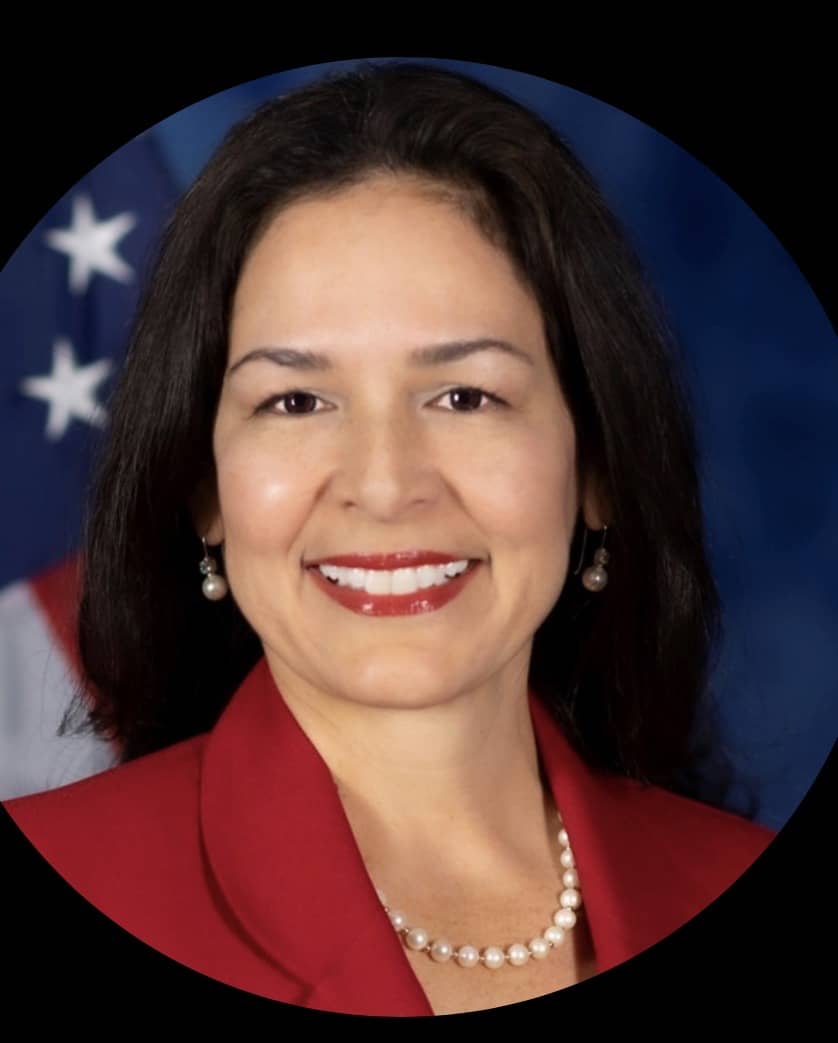
Five Questions, One Educator: Dr. Elizabeth Nunez
For this month’s Leading Educator’s Perspective, Interview Correspondent Carol Yassa speaks with Dr. Elizabeth Nunez, Founding Director of the VA Dental Education Program.
Over a career spanning education, clinical care, organizational development, and national leadership, Dr. Nunez has helped shape how dental professionals learn across one of the country’s largest healthcare systems. In this conversation, she discusses the evolution of dental education, how AI should enter the learning environment, the importance of understanding how students are already using these tools, and why human skills remain indispensable.
Her message for the next generation is particularly timely: use AI judiciously, but continue investing in communication, collaboration, curiosity, clinical judgment, and human connection.
Leading Educator’s Perspective
By Carol Yassa
Interview Correspondent
American Academy of Artificial Intelligence in Dentistry (AAAI-D)
For this month’s perspective, we have a conversation with Dr. Elizabeth Nunez. Dr. Nunez is the Founding Director of the VA Dental Education Program, which she launched in 2008 and led for 15 years. Under her leadership, the program advanced clinical, managerial, residency, and allied-health education across the enterprise. She also created and sustained the longest continuously running virtual dental education program in VA—the monthly Clinical Dental Webinar Series—which continues today and has delivered over 150,000 accredited CEUs to interprofessional learners nationwide.
Alongside her education leadership, Dr. Nunez spent 18 years as the national director of the Homeless Veteran Dental Program, advocating for Veterans experiencing homelessness and overseeing dental care for more than a quarter of a million individuals. Her research and policy work in this area remain widely cited. Three years ago, she joined SimLEARN as Executive Leadership Adjunct Faculty, where she brings her expertise in education, organizational health, and innovation to national simulation initiatives.
Five Questions, One Educator: Dr. Elizabeth Nunez
1. During your time as an educator, how have you seen dental education evolve, and where do you believe AI fits into that broader evolution?
Over the last 20 years or so, I’ve watched dental education shift in some really meaningful ways. One of the biggest changes is that adult learning platforms have evolved dramatically moving from traditional, classroom-centric models to flexible, blended, and technology-enhanced formats that better meet learners where they are.
We’ve moved well beyond the old model of everything happening in a single building. Now we’re using distributed clinical sites, virtual classrooms, and blended or micro-learning formats. That shift has opened the door for more flexibility, more access, and more ways for learners to stay engaged. I’m also especially thrilled to see the growth of interprofessional education. We’re seeing more simulation-based multidisciplinary exercises, shared clinical rotations, and team-based treatment-planning sessions. These experiences help break down long-standing silos and give learners a realistic sense of how oral health fits into whole-person care.
AI fits naturally into both of these changes. AI isn’t replacing good teaching or clinical judgment, but it is becoming a natural extension of these modern learning environments. It supports simulation-based training, helps standardize learner feedback, and gives students extra tools to practice diagnostic thinking in low-risk settings. In many ways, AI is just the next step in the same direction we’ve already been heading—toward more collaborative and digitally supported education that prepares clinicians for the realities of contemporary practice.
2. The VA has been a leader in advancing AI education through initiatives such as the International Symposium on Artificial Intelligence in Dentistry. What motivated the VA to prioritize AI education, and what impact do you hope these efforts will have on clinicians and educators?
Our clinicians are very busy fulfilling the mission of the VA and have heavy schedules. The VA prioritized AI education because clinicians were starting to face AI tools without having the time or background to really understand them. We wanted to give people clear, trustworthy guidance so they could feel confident evaluating and using these technologies safely.
By creating accessible, mission-driven training—like the International Symposium—we’re hoping to build a shared foundation of AI literacy that empowers clinicians and educators. We know that ultimately that knowledge will strengthen patient care and help the workforce stay in pace with rapid changes in technology.
3. As more AI technologies enter dental education, what should educators and institutions be most thoughtful about when introducing these tools to students and residents?
I think the first step is simply understanding how much learners are already using it on their own. My daughter is a second year dental student, so I know students and residents are using all sorts of AI programs to study, to draft treatment plans, and even in sim labs.
The younger generation is often adopting these tools much faster than many seasoned dentists. If we’re not asking them how they’re using AI and for what, we risk being out of the loop. Once we know what they’re doing, we can actually teach into it. That means helping learners understand what AI can and cannot do, including the risks—like hallucinations, hidden biases, over-confidence in model outputs, and privacy concerns.
From there, our job is to teach critical appraisal skills, transparency around model limitations, and the very important habit of verifying AI-generated suggestions instead of accepting them blindly. In many ways, being thoughtful about AI in education begins with staying “in the know,” recognizing how learners are engaging with these tools, and helping them apply them responsibly, safely, and with the judgment dentistry demands.
4. How do you envision AI shaping dental education and clinical practice over the next several years? Are there areas where you believe its potential is being underestimated?
I think AI is going to shape dentistry in some very real, practical ways—and probably sooner than most people expect. My hope is that the biggest, most immediate impact will be in reducing the administrative burden that eats up so much of clinicians’ time. If we can offload admin tasks like searching through documentation and images for consults or chart auditing, we give providers more time for what actually matters: thinking, diagnosing, communicating, and providing care.
As for where AI’s potential is being underestimated, I’d put radiographic interpretation at the top of the list. We’re already seeing AI models that can consistently read images, segment anatomy, identify bone levels, and flag pathology. For learners—especially those still developing their diagnostic eye—AI has the potential to serve as a powerful second set of eyes, reinforcing good habits and reducing variability.
Another area that I think is going to be transformed is prosthetics and implant workflows. Digital design, automated measurements, precision modeling, and error-checking are all areas where AI can make these workflows faster, more predictable, and more accessible. For educators, this means we’ll have new opportunities to teach students not just how to perform these workflows, but how to evaluate and verify AI-generated designs.
So realistically, I see AI becoming a consistent part of dental education: reducing burden, strengthening diagnostic feedback, enhancing digital workflows—and giving clinicians more time to do the parts of dentistry that only humans can do.
5. What advice would you share with the next generation of educators and leaders as they navigate this rapidly changing landscape?
If I had one piece of advice, it would be this: lean into the human skills that AI will never replace. Many rising dental professionals have grown up with smart devices in their hands, and it’s easy to see how that can sometimes lead to diminished interpersonal skills.
So while AI can be a fantastic tool, it will never replace the human parts of dentistry. We have an innate capacity to communicate with compassion, build trust, and create real connection—with our patients and with each other.
And that teamwork piece really matters. The interpersonal skills you build with your colleagues shape the environment patients walk into. In my organizational development work, things like listening sessions, intentional communication methods, and team-building have consistently shown that they’re essential for creating teams—and patient experiences—where people feel welcome and valued.
Above all, be a lifelong learner. Dentistry, healthcare, and technology are all changing fast. The best educators and leaders stay curious, keep growing, and continue refining both the technical and the human sides of their craft.
So that’s my advice: use AI judiciously, but invest in the human work—communication, collaboration, curiosity, and team connection. That’s what will carry the profession forward.
Dr. Nunez will retire from VA next month, concluding a 35 year federal career that began with eight years of service as an Army Reserve Medical Service Officer and three years on active duty as a Dental Corps Officer. She leaves a legacy as a clinician, researcher, coach, mentor, and educator whose impact on dental education and Veteran oral health will continue for years to come. We look forward to learning what her future holds.
This Month in Dental AI
1. Reality Check: Do FDA-Cleared Tools Actually Work Chairside?
An independent team at the Veterans Affairs Greater Los Angeles Health Care System put two FDA-cleared clinical decision-support systems through external validation using the records of 90 patients (mean age 61.4 years), with 6–12 months of longitudinal follow-up used to establish ground truth.
For caries detection, the two vendors reached specificities of roughly 80% and 84% with negative predictive values near 97%; for clinically relevant periodontal bone loss (≥33% or ≥5 mm attachment loss), specificities climbed to 93–94%.
The practical message is nuanced but important: these tools are strongest at reliably excluding disease and reducing false positives, which is exactly why the authors frame them as adjunctive screening aids rather than autonomous diagnosticians. For any practice weighing vendor marketing against real-world performance, this study is the counterweight—the numbers are genuinely encouraging, yet standalone diagnostic reliance is explicitly not supported, and every positive finding still requires clinician confirmation.
Source: Farooqi et al., J Am Dent Assoc, 2026 [1]
2. Who’s Actually Buying? AI Adoption on the Ground
Published August 9, this survey of 163 dental practice owners in Mecklenburg-Western Pomerania, Germany—55% of them from rural regions—exposes a striking gap between digitization and intelligence.
Most practices already run fully digital patient records and appointment systems, yet only a minority have implemented any AI, and where they have, it clusters around administrative support, documentation, and radiographic evaluation. The dominant barriers were perceived additional cost, concern about increased workload, and simple unfamiliarity with the technology—not doubt about its clinical value.
Notably, practitioners gravitated toward tools that reduce administrative burden rather than diagnostic add-ons, a signal about where near-term demand actually lies. The broader takeaway for the field is that the bottleneck to everyday dental AI is now largely operational and economic, and that lower-density, rural practices remain underrepresented in most adoption research.
Source: Retzlaff et al., Sci Rep, 2026 [2]
3. Population Health: AI Moves Beyond the Operatory
A critical review in the Journal of Dental Research maps how AI is beginning to serve population-level oral health surveillance, and the scope is far wider than chairside diagnosis.
The authors describe three converging roles: using machine learning on epidemiological data to map population trends and oral health inequities; deploying computer-vision models on intraoral images to remotely screen for caries, gingivitis, oral cancer, and malocclusion; and integrating structured records, imaging, and even biomolecular data through emerging multimodal large language models for precision public health.
They are candid about the obstacles—inconsistent image quality, domain shift, prevalence imbalance, and cost-effectiveness—and argue that standardized imaging protocols for non-clinical settings are prerequisites for scale. This is the forward-looking systems-and-policy angle of the issue: a signal that dental AI’s next frontier may be community and public health infrastructure, built on a foundation of rigorous ethical safeguards.
Source: Chen et al., J Dent Res, 2026 [3]
4. Teledentistry for an Aging World
A timely perspective reframes AI’s role in home-based teledentistry for older adults, proposing it as an “intelligent intermediary” rather than a pure diagnostic engine.
The premise is that the rapid aging of the global population is shifting more care into home and dependent settings where access to dentistry is limited, and that the effectiveness of remote assessment depends less on the communication channel than on image quality, patient guidance, and the clinician-patient interaction.
In this model, AI structures that communication, actively guides image acquisition by non-experts at home, and supports clinical triage—functioning as supervisor and communicator, not just image reader. As mobility-limited patients increasingly struggle to reach the clinic, this access-to-care framing positions AI as a bridge that augments human oversight of remote oral care rather than displacing it, while acknowledging real adoption and ethics hurdles.
Source: Mosaddad, Int Dent J, 2026 [4]
5. Specialty Spotlight: Implant Dentistry
An umbrella review synthesizing ten systematic reviews reports that convolutional neural networks now exceed 90% accuracy for implant identification and for predicting implant success, consistently outperforming both traditional machine-learning models and other AI architectures.
Deep learning was the standout across image-based tasks, and AMSTAR-2 appraisal indicated moderate-to-high confidence in the underlying reviews—a reassuring quality signal in a literature that is often uneven.
But the authors flag a persistent obstacle: limited datasets, a lack of analyses involving multiple implants, and an absence of standardization across imaging protocols and reporting that together cap generalizability and prevent clean head-to-head comparison. Osseointegration prediction, in particular, was addressed by only half the included reviews, marking it as promising but still immature. For implant and prosthodontic practices, the message is that the algorithms are maturing quickly while the evidentiary scaffolding around them still lags.
Source: Mathur et al., J Prosthet Dent, 2026 [5]
6. Ethics, Bias, and Equity
A systematic review of bias, fairness, and equity in dental imaging AI delivers a sobering finding: across ten included studies, none performed demographic subgroup analysis, only two provided even partial demographic reporting, and eight offered no meaningful demographic detail at all.
This matters because the same studies reported strong technical performance for tooth detection, numbering, caries, and plaque assessment—high accuracy that could mask uneven performance across age, sex, ethnicity, dentition stage, or socioeconomic group.
Without subgroup evaluation, algorithms can quietly encode and amplify inequities as they scale into diverse populations. The authors call for representative, multi-center datasets, transparent demographic reporting, and independent test sets with subgroup-specific performance metrics. This is the governance hook of the issue, underscoring that fairness auditing needs to become standard practice before, not after, widespread deployment.
Source: Suganya et al., Int J Med Inform, 2026 [6]
7. Oral Medicine Joins the Frontier
Published August 5, this review turns attention to oral medicine—the interdisciplinary field focused on non-odontogenic disease, including oral mucosal disorders, oral cancer, and orofacial pain—an area often overshadowed by caries and imaging headlines.
The authors organize AI’s contribution into four domains: high-accuracy lesion detection, segmentation, and classification across diverse image types; data-driven diagnosis, risk stratification, and prognosis prediction; precise surgical planning with real-time intraoperative guidance and personalized postoperative management; and the challenges that still constrain all of the above.
Their framing is deliberately practical and clinician-facing, positioning AI as a way to extend—not replace—human perceptual and cognitive capacity. The familiar caveats recur: data quality, algorithmic robustness, ethical governance, and a pressing need for robust clinical validation before oral medicine becomes a genuinely intelligence-augmented discipline.
Source: Ye et al., Int Dent J, 2026 [7]
8. Prevention: AI’s Quiet Growth Area
A scoping review of 43 studies examines AI’s expanding footprint in preventive dentistry, spanning caries and periodontal risk prediction, automated plaque detection, toothbrushing and bite-force self-monitoring, and patient education through chatbots and AI-guided video.
Across these applications, AI matched human experts in risk stratification and enabled personalized, proactive care that identifies high-risk individuals for targeted intervention.
The limitation running through the review is behavioral rather than technical: the hardest problem is translating AI-generated insight into sustained changes in patient behavior, compounded by non-standardized datasets, high costs, and gaps in professional training. Prevention is routinely overshadowed by flashier diagnostic and imaging work, but it may be where AI ultimately delivers the most durable public health value.
Source: Yu et al., Int Dent J, 2026 [8]
Consumer & Direct-to-Patient Corner
9. The AI in Your Pocket: At-Home Plaque Screening Goes Mainstream
The consumer-tech idea of pointing a smartphone at your teeth and asking AI to identify plaque now has real usability data behind it.
A cross-sectional study of 132 adults tested the AI-powered smartphone app TestMyTeeth for at-home dental plaque screening and found a mean System Usability Scale score of 56.2, landing in only the “marginal” acceptability range. About 55% were interested in frequent use, yet only 42% found the app easy to use, half needed technical support, and participants struggled most to capture usable images of posterior teeth.
The takeaway is balanced: direct-to-consumer oral-health AI is genuinely arriving and can empower self-monitoring, but image-capture friction and accuracy concerns without professional oversight mean these apps currently complement, not replace, a dental visit.
Source: Al-Zubaidy et al., Br Dent J, 2025 [9]
10. AI Behind the Front Desk: Automating the Business of Dentistry
Some of the AI patients encounter first may never touch a tooth.
A practice-management review describes how AI and “augmented intelligence” are being applied to scheduling, billing, documentation, treatment-plan communication, and other administrative tasks, potentially giving clinicians more time for person-centered care.
The authors also emphasize the necessary guardrails: ethical oversight, data privacy, algorithmic bias, informed consent, and uneven adoption remain real concerns, and successful implementation depends on education and regulatory clarity rather than technology alone. It may be the least glamorous corner of dental AI—and one of the first patients actually notice.
Source: Hoskin & Lapine, Dent Clin North Am, 2026 [10]
References
- Farooqi OA, Fru GA, Gong YM, Oswald LE, DeNucci DJ. Evaluation of Artificial Intelligence-Based Clinical Decision Support Systems for Caries and Periodontal Bone Loss: An External Validation Study. Journal of the American Dental Association. 2026;157(6):611-618. doi:10.1016/j.adaj.2025.11.005.
- Retzlaff M, Hollborn H, Omara M, Schierz O. An Exploratory Survey of Barriers and Enablers of AI Adoption in Rural and Urban Dental Practices in Mecklenburg-Western Pomerania, Germany. Scientific Reports. 2026;16(1):24705. doi:10.1038/s41598-026-59505-8.
- Chen Z, Liu P, Han K, et al. AI in Oral Health Surveillance: Critical Review. Journal of Dental Research. 2026;105(7):840-852. doi:10.1177/00220345261434568.
- Mosaddad SA. Artificial Intelligence-Mediated Teledentistry for Ageing Populations: Toward Intelligent Intermediary Support in Home-Based Oral Care. International Dental Journal. 2026;76(4):109659. doi:10.1016/j.identj.2026.109659.
- Mathur A, Mehta V, Bhadania M, Patil PG. Artificial Intelligence in Dental Implant Identifications, Planning Accuracies, and Success Predictions: An Umbrella Review. The Journal of Prosthetic Dentistry. 2026;136(2):412-421. doi:10.1016/j.prosdent.2026.05.004.
- Suganya P, Dupada P, Sruthi KG, Panda P, Mohanty JR. Bias, Fairness, and Equity in Artificial Intelligence Systems Used in Dental Imaging: A Systematic Review. International Journal of Medical Informatics. 2026;214:106433. doi:10.1016/j.ijmedinf.2026.106433.
- Ye X, Zha T, Xie X, et al. Artificial Intelligence Meets Oral Medicine: Extending the Capabilities of Human Intelligence. International Dental Journal. 2026;76(5):109798. doi:10.1016/j.identj.2026.109798.
- Yu OY, Zhang JS, Schwendicke F, Lam WY. The Role and Impact of Artificial Intelligence in Preventive Dentistry: A Scoping Review. International Dental Journal. 2026;76(5):109734. doi:10.1016/j.identj.2026.109734.
- Al-Zubaidy D, Innes N, Galloway J, Al-Yaseen W. Evaluating User Perceptions and Usability of an AI-powered Smartphone Application for at-Home Dental Plaque Screening. British Dental Journal. 2025;239(1):46-52. doi:10.1038/s41415-025-8502-0.
- Hoskin ER, Lapine DP. Artificial Intelligence and Augmented Intelligence as Tools for Dental Practice Management. Dental Clinics of North America. 2026;70(2):503-516. doi:10.1016/j.cden.2025.11.017.
American Academy of Artificial Intelligence in Dentistry®
Human First. Patient First.