
Two regulators drew lines around dental AI this month — Britain told its dental schools to set the rules, and Australia told AI scribes that most of them are medical devices. Oral-cancer AI is scoring near 90% on evidence its own authors call weak. And Penn Dental’s dean warns what happens when a school teaches a technology before it is proven.
In this issue: The Lead Story · Featured Studies · Leadership Perspectives — Dean Mark S. Wolff of Penn Dental Medicine · Regulation & Education · Also Worth Knowing · From the Academy
This edition is the Academy's November update.
The Lead Story
The story that matters most this month, in full.
Two Regulators Draw Lines Around AI: Britain’s Schools, Australia’s Scribes
Two regulators on two continents drew lines around dental AI this month — one around the classroom, the other around the consulting room.
In Britain, the General Dental Council has issued guidance on artificial intelligence in dental education. Schools should define what counts as acceptable use, require students to disclose AI help, and train users to check what the tools produce. The guidance rests on a Queen Mary University of London review of 75 studies, which found AI least reliable exactly where dentistry leans on it hardest — in image-dependent tasks.[1]
In Australia, the Therapeutic Goods Administration reviewed 12 AI scribes in clinical use and concluded that eight likely meet the definition of a medical device. None of the 12 suppliers had identified its own product as one. Tools that only transcribe sit outside the definition; tools that interpret or draft clinical records fall inside it, with the registration duties that follow.[2]
Comment. Neither regulator banned anything. Both did something more consequential: they assigned responsibility — to schools, to suppliers, and by extension to the clinician who signs. The question is shifting from ‘is this allowed?’ to ‘who answers for it?’ This month, two regulators answered first.
Featured Studies
Three studies that matter, each with its limits stated.

Oral Cancer Screening by AI: High Scores, Low-Certainty Evidence
Two Systematic Reviews & Meta-Analyses
AI screening for oral cancer scores near 90% for both sensitivity and specificity in two new meta-analyses — and in both, the authors rate the evidence underneath the scores as weak.
The BMC Oral Health analysis pooled ten datasets on AI applied to oral cavity imaging for oral squamous cell carcinoma: sensitivity 0.901, specificity 0.897. Assessed under GRADE, certainty was low for sensitivity and very low for specificity, across mostly retrospective studies. A second analysis, in the Journal of Dentistry, pooled 13 studies of AI on smartphone-acquired oral images: sensitivity 0.89, specificity 0.87.
What this does not establish: readiness for clinical use. Both sets of authors say the same thing — prospective, multicentre validation with standardised endpoints comes first.[3, 4]
In numbers: pooled sensitivity 0.90 · specificity 0.90 · smartphone screening 0.89 / 0.87 · certainty of evidence rated low to very low
Two Language Models, 645 Root Canal Cases, and the Endodontists Still Ahead
Benchmark Study · Journal of Endodontics
Ask a language model one question about a root canal case and it usually answers well. Ask it to carry a whole case — diagnosis, plan, difficulty — and it comes apart. In a multicenter study spanning the United States, Kuwait, and Iran, ChatGPT-5.2 and Gemini 3.0 worked the same 645 cases as calibrated endodontists, from identical summaries and radiographs.
On single endpoints, accuracy ran from 74% to 88%. Combined across a case, it fell to 61.1% and 59.4%; with difficulty included, to 47.3% and 46.2% — an error that matters in about half of cases, with treatment planning the weakest endpoint. The authors allow the models one role: adjuncts under expert supervision. What this does not establish: performance in live practice — the study was retrospective.[5]
A model that answers most single questions correctly can still assemble those answers into a plan that errs somewhere that matters.
In numbers: 645 cases · single-endpoint accuracy 74–88% · combined-endpoint accuracy 61% / 59% (ChatGPT-5.2 / Gemini 3.0) · 47% / 46% on cases with difficulty
Predicting Which Teeth Will Progress: Periodontitis, Tooth by Tooth
Prediction Model · 3,017 Teeth
Which teeth will get worse? A new model answers tooth by tooth — and its answers look strong, until you ask what it is really reading.
Built from one centre's records — 3,017 teeth in 162 patients — the model scored 0.944 at one year, 0.912 at three, and 0.907 at five. But its strongest signals are how much attachment a tooth has already lost and whether the roots are involved. Take baseline severity out, and the five-year score falls to 0.782: much of the forecast is how diseased the tooth already was. What this does not establish: performance anywhere else. It has never been tested outside its own records.[6]
In numbers: AUC 0.944 at one year · 0.912 at three · 0.907 at five · 0.782 without baseline severity

Leadership Perspectives
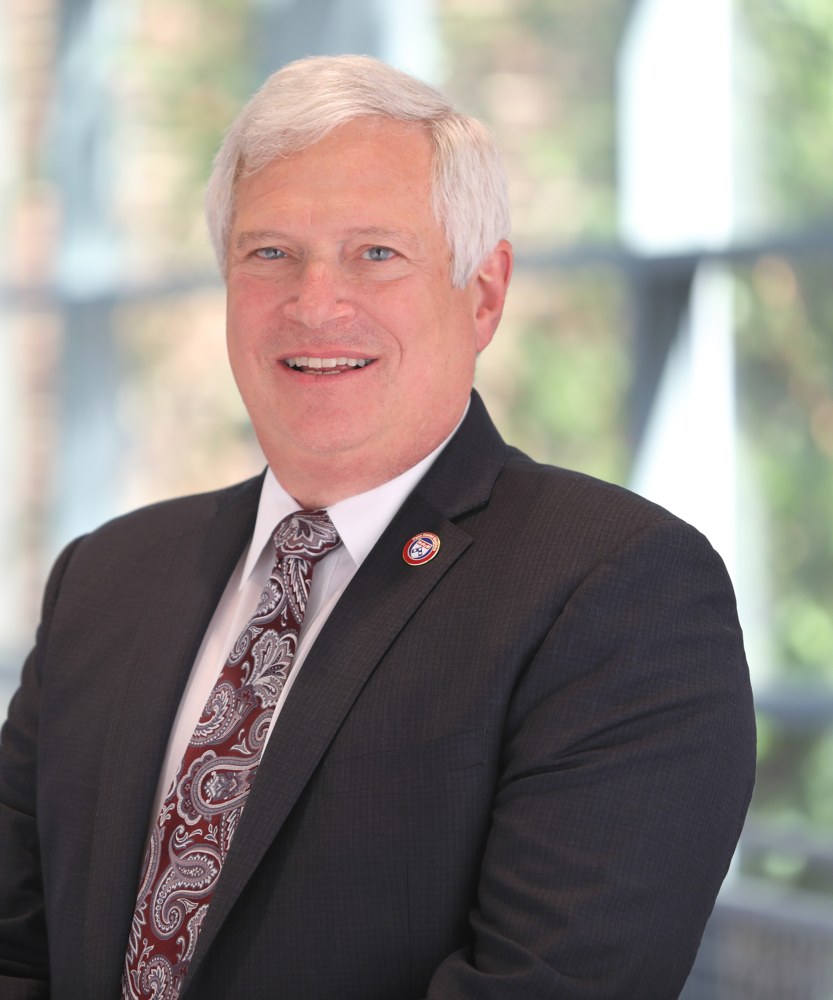
Dr. Mark S. Wolff on Integrating AI Into Dental Teaching Clinics
Interview by Carol Yassa
Interview Correspondent, American Academy of Artificial Intelligence in Dentistry®
As artificial intelligence becomes more common in dentistry, dental schools must determine how to integrate these tools into teaching clinics without compromising student learning or patient safety. What evidence should schools require before using AI in clinical care, and how can they ensure students continue to develop independent clinical judgment?
For Dr. Mark S. Wolff, DDS, PhD, Morton Amsterdam Dean of the University of Pennsylvania School of Dental Medicine, the answer lies in validating these technologies, maintaining appropriate clinical oversight, and ensuring that their benefits outweigh their risks. The Academy put six questions to Dr. Wolff. His answers are published as he gave them.
Teaching a technology before it is proven, or worse, when it is not correct, leaves a generation doing the “wrong” treatment.
Dr. Mark S. Wolff
In the full conversation, Dr. Wolff sets out what dental schools should require of AI before it enters the teaching clinic: evidence before adoption, oversight in proportion to risk, assessment that tests whether students can question the machine — and the principles he uses, as dean, to decide when a tool is ready for routine use.
Regulation and Education
Regulators and educators also acted this month — in London, Washington, Montgomery, and Canberra.
Britain's Regulator Tells Dental Schools to Set the Rules for AI
The General Dental Council has told UK dental schools to govern AI, not just adopt it: set out which uses are acceptable in learning and assessment, require students to disclose significant AI contributions to submitted work, and train students and staff to check what AI produces. Its commissioned report, from Queen Mary University of London, reviewed 75 studies and found AI least reliable in image-dependent work such as reading radiographs.
What it means: schools without AI-use rules now have a regulator's template — and a quality-assurance reason to use it.
The FDA Puts AI Device Oversight at the Top of Its 2027 Agenda
The FDA's device center has put AI at the top of its fiscal 2027 guidance agenda: finalize the lifecycle-management guidance for AI-enabled device software, and the predetermined change control plan guidance that lets a cleared AI product improve without starting over. The center, CDRH, is the one that reviews dental imaging AI. Comment on the priorities is open until November 30, 2026.
What it means: the standing rules for AI products already in use — monitoring, drift, updates — are being written now.[7]
Comment Closes on the FDA's Generative-AI Questions
The comment period closed on October 19 for the FDA's discussion paper on regulating generative AI-enabled medical devices. The paper proposes benchmarking plus clinical confirmation before market entry, and afterwards periodic re-benchmarking, sample-based clinician review, and monitoring for performance drift.
What it means: generative tools now entering documentation and patient communication will be judged by whatever framework comes out of this docket.[8]
Alabama Bars AI-Only Coverage Denials
Alabama's SB 63, in force since October 1, requires that a decision to deny, reduce, or defer a prior authorization be made by a licensed physician or other qualified health care professional — not by an algorithm alone. AI-assisted decisions must reflect the patient's own medical history; insurers must disclose their use of AI in utilization review and certify annually that their tools do not rely solely on group data. At least seven states enacted such laws in 2026.
What it means: a named human, the patient's own record, and disclosure — that is becoming the legal template, state by state.[9]
Also Worth Knowing
Shorter reports from the month's journals.
Counting Plaque From a Photograph
An AI system graded disclosed plaque on photographs of 438 teeth about as consistently as dentists grade each other — weighted kappa 0.812 against a calibrated dentist, where the two human examiners agreed at 0.791. Twenty adults, buccal surfaces only; external validation is still needed.[10]
Sinus and Tooth, Classified — Against the CBCT Standard
YOLO models classified the relationship between the sinus floor and posterior tooth roots in 3,691 tooth regions on panoramic films, checked against CBCT, reaching an F1 score of 0.95; cortical contact was the hardest category. One centre, internal validation only — the authors say so themselves.[11]
Implant Brands by Deep Learning: The Dataset Decides
Across 20 studies, deep learning identified implant brands and systems from images at 75–99% accuracy. The pattern matters more than the scores: small, narrow datasets reported the highest numbers; large multicentre datasets reported lower, more believable ones.[12]
Caries and Restorations in Children's Molars, From Photographs
A three-stage pipeline found primary molars in photographs, segmented them, and classified caries and restorations — detection precision 0.963, classification accuracy about 86–88% across 725 photographs of children aged 6 to 12. Larger, more diverse validation is still to come.[13]
The References Were Fabricated: Counting Hallucinations in Chatbot Output for Dental Education
Five chatbots produced 500 references on restorative dentistry topics; checked by hand against indexed databases, the fabrications were frequent — most severe in Copilot and DeepSeek, least in ChatGPT-5.2 and Perplexity. Author names, journal titles, and DOIs were the most common inventions.[14]
Chatbots Outscore Humans on Radiation Safety — a Test, Not a Clinic
On a 25-question radiation-safety test, seven chatbots scored 80–91%; 344 people — dentists, medical doctors, and members of the public — scored 32–60%. A test is not a clinic, as the authors note. The human scores are the finding.[15]
Fracture Films, Read by Chatbots
Given 104 panoramic films, a blinded oral and maxillofacial surgeon classified every one correctly; ChatGPT and Gemini missed fractures, flagged sound jaws, and could rarely say where a fracture was.[16]

From the Academy
News from the Academy this month.
The Academy Is Now an ADA CERP Recognized Provider
The American Academy of Artificial Intelligence in Dentistry has been recognized as a provider of continuing dental education under the American Dental Association's Continuing Education Recognition Program (CERP), effective November 1, 2026, through December 31, 2028.
The Academy has awarded continuing education credit under its own name from its earliest programs. CERP recognition extends the reach of that credit, which may apply toward license renewal in most states. The Academy also accredits artificial intelligence educational programs offered by other institutions that meet its standards.

Los Angeles 2027: Registration Open, Preliminary Program Published
Registration is open for the Academy's Inaugural Annual Meeting, and the preliminary program is now published. The meeting takes place on Friday, July 9, 2027, in the Grand Horizon Room at UCLA Covel Commons in Los Angeles, under the theme "From Innovation to Implementation: Advancing the Clinical, Scientific, and Economic Case for AI in Dentistry."
Sixteen speakers from five countries anchor the program — clinical care, practice and enterprise dentistry, the standards shaping the field, and AI research and education. The Academy is an ADA CERP Recognized Provider, and continuing education credit will be available for the meeting program. Early-bird registration runs through January 31, 2027. Abstract acceptance notifications are scheduled for November 15, 2026.
Membership Has Reopened
Membership has reopened. Applications are being accepted again, in every category, on the Academy’s rebuilt membership system. Apply for membership.
The Line to Remember
“Teaching a technology before it is proven, or worse, when it is not correct, leaves a generation doing the ‘wrong’ treatment.” — Dr. Mark S. Wolff, Morton Amsterdam Dean, University of Pennsylvania School of Dental Medicine
Sources
1. General Dental Council. Understanding the Role of AI in Dental Education. Report commissioned from Queen Mary University of London. October 15, 2026.
2. Therapeutic Goods Administration (Australia). Review of digital (AI) scribes — outcomes. October 16, 2026. Reported by Healthcare IT News, October 21, 2026.
3. Sayed A, Kiazolu J. Artificial intelligence-assisted imaging for oral squamous cell carcinoma diagnosis: a systematic review and diagnostic test accuracy meta-analysis. BMC Oral Health. October 24, 2026. DOI: 10.1186/s12903-026-10288-4.
4. Cao R, Ren Q, Xu L, Tang Y, Bao Q, Zhang H, Wang J, Zhu X. Artificial intelligence-assisted detection of oral cancer and oral potentially malignant disorders on smartphone images: a systematic review and meta-analysis. Journal of Dentistry 176: 107101. Published online October 12, 2026. DOI: 10.1016/j.jdent.2026.107101.
5. Torabinejad M, Tordik PA, Alenezi M, Parirokh M, Dianat O, Foroughi M, Zegar Z, Oyoyo UE. Comparing Diagnostic Ability of Two Off-the-Shelf Large Language Models with That of Endodontists for Teeth Requiring Initial Root Canal Treatment: A Multicenter Retrospective Investigation. Journal of Endodontics. Published online October 13, 2026. DOI: 10.1016/j.joen.2026.10.003.
6. Liu Q, Dai F, Huang J, Xiong Y, Lou W, Deng L, Li L, Zhu H, Huang Y, Song L. Tooth-level prediction of periodontitis progression from baseline clinical characteristics: a retrospective cohort study using Cox regression and SHAP analysis. BMC Oral Health. October 14, 2026. DOI: 10.1186/s12903-026-10197-6.
7. U.S. Food and Drug Administration, Center for Devices and Radiological Health. Guidance Agenda for Fiscal Year 2027. October 1, 2026.
8. U.S. Food and Drug Administration. Considerations for the Regulation of Generative AI-Enabled Medical Devices (discussion paper). Docket FDA-2026-N-7874; comment period closed October 19, 2026.
9. Alabama Senate Bill 63 (2026). Effective October 1, 2026. Reported in Physicians Practice, October 16, 2026.
10. de Andrade EF, Felisberto K, Correia RLB, Shibli JA, Hassan MA. A deep-learning system for dental plaque quantification from disclosed intraoral photographs, validation against clinical plaque scoring. Journal of Dentistry. Published online October 19, 2026. DOI: 10.1016/j.jdent.2026.107124. Funding: State of São Paulo Research Foundation.
11. Taşyürek M, Mutlu O, Kaygısız ÖF, Teke MT, Adıgüzel Ö, Şevik U. Comparative evaluation of YOLO models for classifying maxillary sinus and posterior tooth relationships on panoramic radiographs with CBCT validation. Scientific Reports. October 23, 2026. DOI: 10.1038/s41598-026-77298-8.
12. Durmaz Yilmaz OM, Leblebicioglu Kurtulus I. Deep learning for dental implant brand classification: a systematic review of imaging modalities, methodological variability, and model performance. BMC Oral Health. October 17, 2026. DOI: 10.1186/s12903-026-09926-8.
13. Kavousinejad S, Motie P, Daghighi Y, Norouzi A, Rabbani H, Biglar N, Ebadifar A, Behnaz M. Artificial Intelligence-based multi-stage pipeline for detecting caries and restorations in pediatric primary molars from intraoral photographs. BMC Medical Imaging. October 20, 2026. DOI: 10.1186/s12880-026-02975-z.
14. Yildirim Manav E, Usta SN. Reference Hallucination in AI-Assisted Restorative Dentistry Education: An Educational Risk Assessment Using the Reference Hallucination Score Framework. European Journal of Dental Education. First published October 12, 2026. DOI: 10.1111/eje.70321.
15. Karslıoğlu H, Çetin FS, Altun H. AI chatbots showed higher response accuracy than dentists, medical doctors, and the general public on radiation safety questions. Scientific Reports. October 26, 2026. DOI: 10.1038/s41598-026-77832-8.
16. Yapıcıoğlu E. Prompt-based evaluation of ChatGPT and Gemini for mandibular fracture detection and localization on panoramic radiographs. BMC Oral Health. October 23, 2026. DOI: 10.1186/s12903-026-10291-9.
The AAAI-D Brief is published by the American Academy of Artificial Intelligence in Dentistry® for educational purposes. It summarizes published research and reporting and does not constitute clinical, legal, or regulatory advice. References to specific products, companies, or services are for informational purposes only and do not constitute endorsement, recommendation, or certification by AAAI-D.