
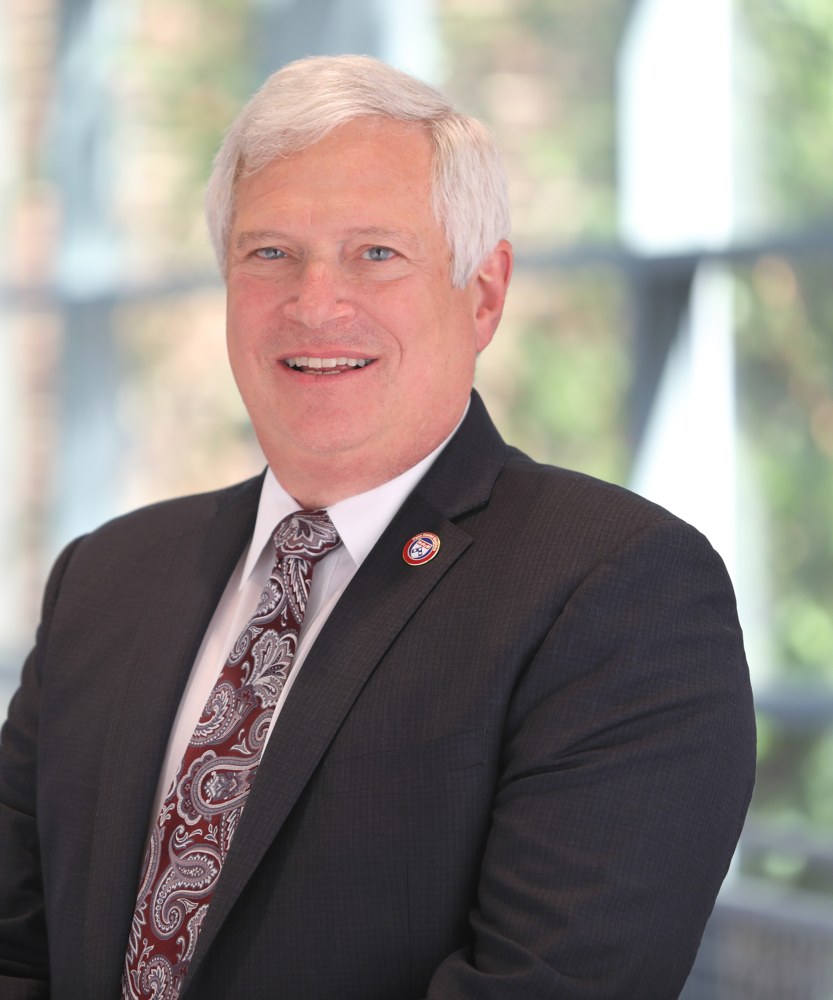
Interview by Carol Yassa
Interview Correspondent, American Academy of Artificial Intelligence in Dentistry®
As artificial intelligence becomes more common in dentistry, dental schools must determine how to integrate these tools into teaching clinics without compromising student learning or patient safety. What evidence should schools require before using AI in clinical care, and how can they ensure students continue to develop independent clinical judgment?
For Dr. Mark S. Wolff, DDS, PhD, Morton Amsterdam Dean of the University of Pennsylvania School of Dental Medicine, the answer lies in validating these technologies, maintaining appropriate clinical oversight, and ensuring that their benefits outweigh their risks. The Academy put six questions to Dr. Wolff. His answers are published as he gave them.
Integrating AI Into Dental Education and Clinical Practice
As AI tools become more common in dentistry, where do you see the greatest opportunities for integrating AI into dental teaching clinics to improve both student learning and patient care?
I see significant opportunities to integrate AI technologies into the learning environment, especially as decision-support tools in teaching clinics and basic sciences. These technologies can assist students in interpreting radiographs and clinical images, identifying patterns in electronic health records, assessing risk, organizing differential diagnoses, and comparing treatment options.
As an example, Penn Dental Medicine’s living-guidelines program (supported by a partnership with the American Dental Association) aims to transform how quickly scientific discoveries benefit patients. Harnessing artificial intelligence and translation research, the initiative accelerates rigorous systematic reviews while reducing their cost. Rather than waiting years, emerging evidence, novel treatments, and changes in healthcare delivery could inform updated clinical recommendations within weeks. This approach enables faster adoption of effective interventions, reduces outdated or unnecessary care, and supports more efficient use of healthcare resources. The program establishes a scalable model for translating research into practice, with potential applications across healthcare disciplines worldwide.
Additionally, AI can promote personalized prevention strategies, enhance patient communication, and allow both students and faculty to dedicate more time to direct patient care. The educational benefits are maximized when the AI system provides transparent reasoning, encourages students to express their agreement or disagreement, and enables faculty to use the AI-generated output as a basis for discussion rather than as a definitive answer key. The key element is that students must always be engaged in the learning process!
Evidence Must Come Before Adoption
What evidence should dental schools require before adopting an AI tool for use in clinical settings, particularly when that tool may influence diagnosis, treatment planning, or other patient-care decisions?
For high-risk applications, prospective evaluation and ongoing post-implementation monitoring are essential. This represents a significant challenge in the rapid emergence of AI technologies.
AI Should Support, Not Replace, Clinical Judgment
What safeguards should be in place to ensure that AI supports, rather than replaces, the clinical judgment of dental students, faculty, and practicing clinicians?
AI should complement clinical judgment rather than replace it. Every recommendation generated by AI should be reviewed by a qualified clinician to ensure accountability and proper oversight, considering the learner’s experience level. Students must document their own assessments before viewing or accepting any AI recommendations and should be ready to explain their agreements or disagreements with the AI’s suggestions.
Teaching Students to Question AI
How can dental schools teach students to critically evaluate AI-generated recommendations, recognize potential errors or biases, and understand the limitations of these tools?
We should teach AI literacy as a core component of evidence-based practice. Students need to understand how data quality, prevalence, study design, model training, and threshold selection affect performance. They need to be able to identify data and model design biases that may lead to incorrect AI assumptions. Case-based exercises should include incorrect, incomplete, and conflicting AI outputs so students learn to identify failure modes. Students must learn to use AI-generated findings appropriately; for example, the identification of early caries does not mandate surgical intervention. Assessment should focus not on whether students can operate a tool, but on whether they can question it, explain its limitations, communicate uncertainty, and make a defensible independent decision.
Assessment should focus not on whether students can operate a tool, but on whether they can question it, explain its limitations, communicate uncertainty, and make a defensible independent decision.
Dr. Mark S. Wolff
Patient Safety, Equity, and Public Trust
What responsibilities do dental schools have to ensure that AI tools are safe, equitable, and transparent for the diverse patient populations they serve?
Dental schools have an obligation to be careful stewards of both innovation and public trust. It is essential to quickly adopt validated technologies, as we are training generations of dentists and treating hundreds of patients; delays may result in generations failing to use the latest technologies. Teaching a technology before it is proven, or worse, when it is not correct, leaves a generation doing the “wrong” treatment. It is essential to ensure that patient data is protected.
It is essential to quickly adopt validated technologies, as we are training generations of dentists and treating hundreds of patients; delays may result in generations failing to use the latest technologies.
Dr. Mark S. Wolff
AI may enable a more equitable and safer delivery of care, including care for individuals with disabilities, medically complex patients, and groups that have historically been underrepresented.
Teaching a technology before it is proven, or worse, when it is not correct, leaves a generation doing the “wrong” treatment.
Dr. Mark S. Wolff
Deciding When AI Is Ready for Routine Use
As dean, what principles would guide your approach to deciding when an AI tool is ready to move from promising technology into routine use in a teaching clinic?
I adhere to several guiding principles: educational value, sound evidence of efficacy, improvement in equity/access, improvement in patient care, and accountability. An AI tool should only become part of our routine practice when it meets a clearly defined need, has been independently validated for our clinical/education environment, and shows benefits that outweigh any risks and burdens.
AI technologies must be easy to understand, utilize, and supervise. They must be compatible with our practice workflow, secure, and equitable across different patient groups. Faculty and students must receive proper training before implementation, and patients must be adequately informed. Additionally, the school must maintain the capacity to monitor performance, report issues, and suspend use if necessary.
Promising technology becomes a responsible practice only when it is evidence-based, manageable, and subject to continuous evaluation.
About Dr. Mark S. Wolff
Dr. Mark S. Wolff, DDS, PhD, is the Morton Amsterdam Dean of the University of Pennsylvania School of Dental Medicine and a Professor in the Division of Restorative Dentistry. Before joining Penn, he served as a professor and chair of Cariology and Comprehensive Care at New York University College of Dentistry, where he also held a senior associate dean position. His research spans dental caries, remineralization, dental erosion, periodontal disease, dental materials, and dentinal hypersensitivity. He has authored more than 100 scientific papers and textbook chapters and edited textbooks. He is also an advocate for improving dental access for individuals with physical, intellectual, and developmental disabilities. As dean, Dr. Wolff emphasizes the connection between research, education, and clinical practice.
From the AAAI-D Brief, November 2026. Read the full issue.